





Two Theaters, One Playbook: What a Master Plan Buys a Historic Building
-
Category
Perspectives, Innovation -
Posted By
Schmidt Associates -
Posted On
Oct 05, 2026
If you’ve ever stepped inside a historic theater, you know the feeling: the hush under an ornate ceiling, a stage that’s seen generations of first dates and first movies, and a marquee still worth looking up at.
These buildings are more than architecture. They’re civic memory.
Across the country, many of these theaters are at a crossroads: looking for a new chapter, searching for funding to catch up on deferred maintenance, or simply competing for attention with the distractions of the 21st century.
Fortunately, that case keeps getting easier to make. Historic theaters don’t just preserve a landmark; they drive real economic activity downtown. According to the National Trust for Historic Preservation, they generate at least $2 to $3 in economic impact for every dollar spent on tickets, from dinner and parking to the shop next door.
But saving these buildings takes more than sentiment. It takes a plan.
At the Indiana Landmarks Historic Preservation Conference, Joseph Jarzen, client liaison for Schmidt Associates’ Community Studio, joined Suzanne Sweeney, managing director of the Indiana Repertory Theatre, and Marcus Mizelle, director of venue operations at the Indianapolis Symphony Orchestra, for a session called “Curtain Call for the Past, Opening Night for the Future: Preserving Indiana’s Historical Theaters.” They used two Indianapolis landmarks, Hilbert Circle Theatre and Indiana Repertory Theatre, as real-world examples of what comprehensive master planning can do for a historic venue.
The common thread
Before getting into the specifics of either project, it’s worth noting how closely these two buildings’ stories track one another.
Both share a similar origin: built in the early 20th century, both came close to demolition at some point in their history, saved by people who understood what tearing a building down would really cost a city: not just in dollars, but in identity.
Both were also left with decades of piecemeal, patchwork upgrades, solving one problem at a time but rarely able to address the building as a whole. That’s the reality of operating a historic venue on limited funding: Repairs happen when the money and the moment align, not necessarily in the order a building needs them.
This is where a true master planning process comes in, and it’s the thread connecting both projects. Our team approached each building as a whole: a floor-by-floor walk-through, laser measurement to capture the space with precision, and stakeholder focus groups covering everything from accessibility to acoustics to future programming needs. The result in each case wasn’t just a wish list, but a prioritized, fundable road map that when each project is implemented, it ensures the institutions, its funders, and its audiences that the improvements would be part of a broader story to improve the theatergoing experience.
Hilbert Circle Theatre
Home to the Indianapolis Symphony Orchestra, Hilbert Circle Theatre faced a familiar story: years of deferred maintenance outpacing the one-off fixes meant to keep up with it. A seven-month, whole-building assessment, the first of its kind for the building, laid out both the problem and the path forward:
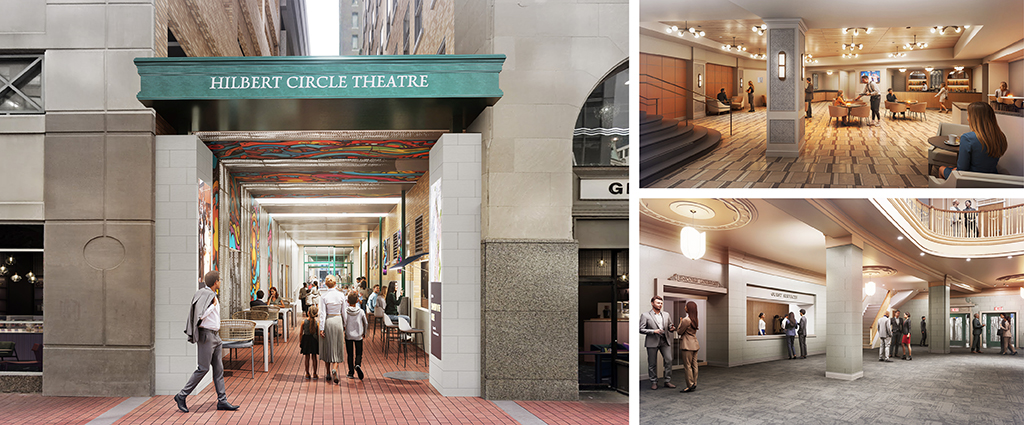
- The challenge: How can the symphony attract a broader audience, open the building up more 24/7 rather than just on concert nights, and address clear deferred maintenance issues throughout the building to support an internationally known orchestra and organically activate its place on Monument Circle?
- The plan: a prioritized capital road map addressing critical infrastructure first, paired with reimagined public areas, from the Scioto Street entrance that will elevate the guest experience upon arrival to a reimagined Wood Room overlooking the Circle and an Encore Lounge that will invite people in from the Monument itself.
- The response: A master plan study confirmed that donors, audiences, arts organizations and civic groups, musicians, and staff are genuinely energized by the opportunity to invest in preserving this building and its place downtown rather than building something new.
Indiana Repertory Theatre
The IRT’s story starts even earlier: 1927, as a 3,000-plus-seat movie palace built during an era when going to the movies was still a novelty. Like Hilbert, its master plan had to reckon with both a complex history and a clear-eyed look at what comes next:
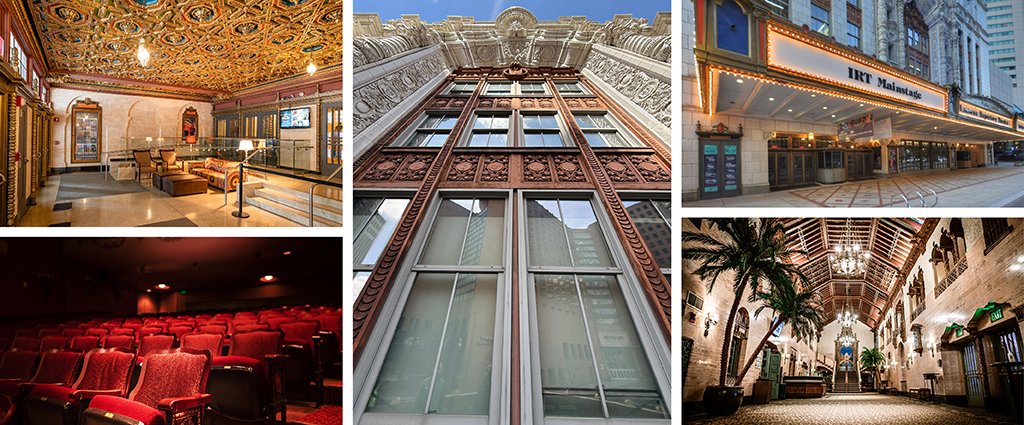
- The history: originally opened as a segregated venue, a fact the IRT now actively names as part of its commitment to welcoming every community into the space today, later rescued from demolition and reborn as a producing theater in 1980.
- The challenge: growing into larger productions and modern infrastructure without breaking apart the tight-knit, all-under-one-roof culture that makes the place work, all while approaching the building’s 100th anniversary in 2027.
- The plan: a prioritized road map of updates designed to let the building to expand creatively into a landlocked area so that it may perform into its next century without losing what makes it work today.
What this means for historic venues everywhere
None of this is about pointing out what wasn’t done. Most organizations caring for a historic building know exactly what it needs.
What they’re often missing isn’t the vision; it’s the runway: the dedicated funding, staff time, and comprehensive information needed to step back from the day-to-day list of fixes and see the whole building at once.
That’s where a master plan earns its keep. It doesn’t second-guess the repairs already made. It gives an organization a clear, sequenced, fundable way forward. And it gives them stronger information to bring to their donors, city partners, and community, who all want to see that building succeed.
Accessibility shouldn’t be a retrofit; it should be designed in from the start. Engagement shouldn’t be a nice-to-do add-on; it should be integrated into the process.
Funding conversations go further when they’re backed by real data, not guesswork. And perhaps most importantly, the people who show up every day (staff, patrons, donors, and the community) need a seat at the table before the plans are drawn.
That’s how Schmidt Associates approaches every project: We listen first, to the organization’s mission and to the people who carry it forward, before a single design decision gets made. The symphony and the IRT agreed and incorporate that approach into their own operations, and took the journey with us to complete their master plans.
Having walked this process with two of Indianapolis’ most storied venues, one thing has become clear: The buildings making it to their next act aren’t the lucky ones. They’re the ones with a plan, and the team who understand that the story inside those walls matters as much as the walls themselves.
Your building’s next act
If your building has been absorbing one fix at a time, or you see a vision that can help it grow, the first step is smaller than it sounds: a walk-through, and a conversation about what a whole-building master plan would cover for your organization. Master planning isn’t just for theaters. It’s for libraries, museums, community centers, fairgrounds, and any building a community counts on.

Joseph Jarzen, client liaison for the Community Studio at Schmidt Associates, presented alongside Suzanne Sweeney, managing director of the Indiana Repertory Theatre, and Marcus Mizelle, director of venue operations at the Indianapolis Symphony Orchestra, at the Indiana Landmarks Historic Preservation Conference.
Share this post on