




Built for Them: A Healing Home for Pediatric Hippotherapy at Children’s TherAplay
-
Category
Studio-Community, Perspectives -
Posted By
Schmidt Associates -
Posted On
May 07, 2026
When a horse barn becomes what Children’s TherAplay Foundation describes as one of the country’s largest pediatric hippotherapy facility, every square foot has to earn its place.
What does healing look like for a child with a disability?
For hundreds of families in Indianapolis, Indiana, it looks like a horse. It sounds like hoofbeats. And now, thanks to a major renovation, it feels like a space that was built just for them.
At Children’s TherAplay, that answer is made possible through hippotherapy.
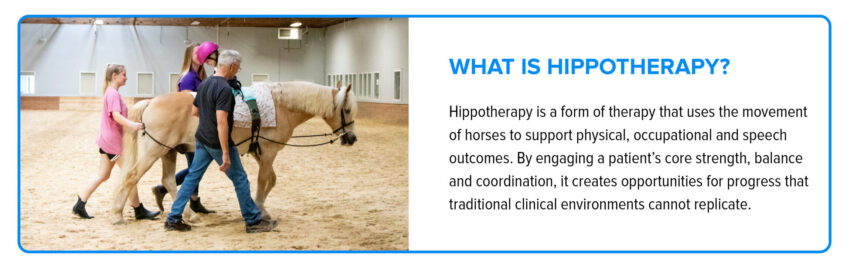
The Children’s TherAplay Foundation uses horses as a treatment tool, providing physical, occupational, and speech therapies to children with a wide range of disabilities. The results are transformational. The mission is clear: help every child thrive.
The existing space had served them well, but the mission had grown bigger than the building. When TherAplay was ready to take the next step, they called on Schmidt Associates to help them get there. Schmidt Associates approached the project with a focus on pediatric therapy space design, ensuring every decision supported both clinical outcomes and emotional well-being.
A barn becomes a destination
These kids know what a doctor’s office feels like. The cold floors, the fluorescent lights, the waiting, often multiple times a week. The Owner’s vision was to give them something different: a place that felt like an escape.
Warm. Cozy. Alive with the spirit of the barn it was always meant to be. A place children would actually look forward to, where a therapy appointment felt less like an obligation and more like an adventure. Every decision on this project started there.
The original clinical area was demolished and a new 31,700-square-foot addition was designed to wrap around the perimeter and enclose the existing riding arena, creating a seamless connection between the indoor therapy world and the horses at the heart of the program.
Design that puts children and families first
The design was built with growth in mind, creating space that could accommodate new services, more families, and expanded programming without requiring another major renovation.
“Our families come to Children’s TherAplay seeking respite from traditional clinic settings. Many have been in hospital settings with their child since birth, so Children’s TherAplay very intentionally leaned into our relaxed farm feel in the design of our new space,” said Kathy Pelletier, executive director of Children’s TherAplay. “Waiting rooms were set up to foster collaboration and engagement between parents and caregivers, and outdoor spaces offer walking paths and a sensory garden. We had the whole family in mind, when we were planning the best way we could grow.”
Key features of the new facility include:
- One-level design for seamless, ADA-accessible movement throughout
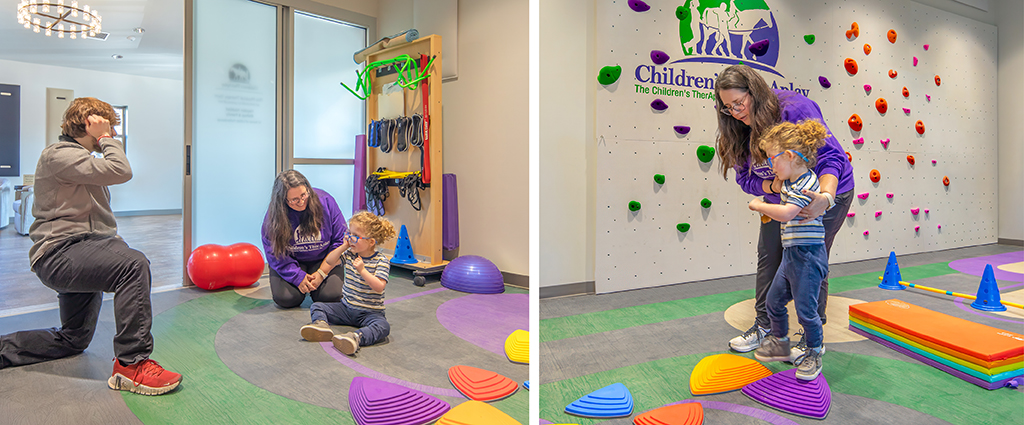
- Expanded clinical space and therapy gym designed in direct collaboration with on-site therapists, equipped for suspended therapy swings and bars
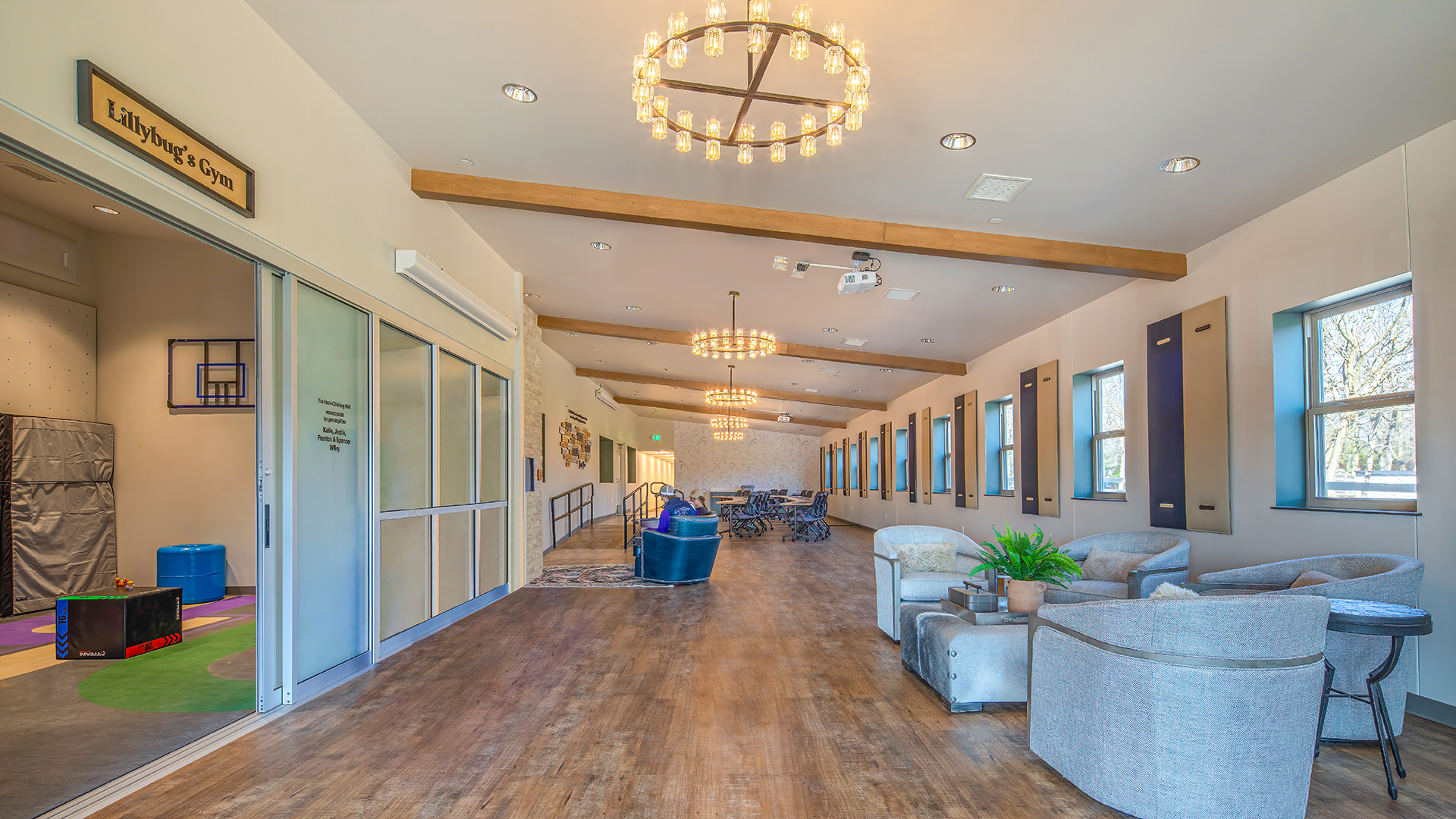
- A family waiting area with workstations and play space designed to welcome siblings, with a direct view into the riding arena
- Extra-large restrooms designed to accommodate families and caregivers
- A mudroom to ease the transition between outdoor and clinical spaces
- New administrative offices
Accessible by design, not by default
Serving children with disabilities means holding accessibility to the highest standard. Full ADA and HIPAA compliance was built in from the start, and it showed up in the details. The horse barn required a thick layer of specialized footing material on top of the concrete slab, creating a nearly two-foot height difference between spaces. Our team designed custom ramps to bridge that gap, ensuring patients using wheelchairs, walkers and other mobility aids could move seamlessly throughout.
Every threshold was scrutinized with the same lens. Flooring was specified to be padded enough for comfort yet firm enough for wheelchair traction. These are the details that don’t appear in a rendering but matter most to the families who use this space every day.
Working around a barn
Not every design challenge is glamorous. The existing pole barn came with a sloped roof that threatened to make the new clinical space feel smaller than it was, and adding onto a horse arena meant navigating ceiling infrastructure needed for suspended therapy equipment. Neither had an obvious solution. The team had to think creatively, modeling configurations that preserved the open, airy feel the Owner envisioned without sacrificing a single clinical requirement. The result required both ingenuity and persistence to get right.
Designed to feel different
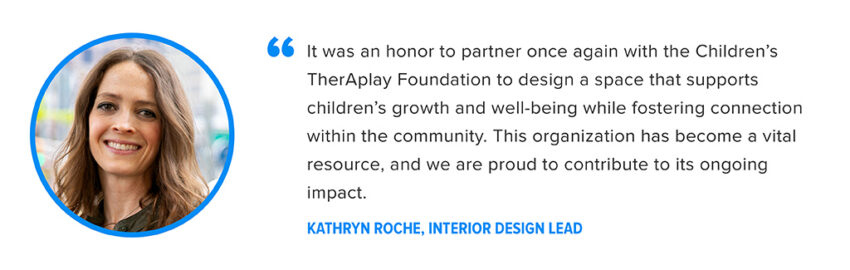
Walk into the new facility and you don’t feel like you’re in a clinic. The challenge was achieving that intentionally. Clinical materials rarely come in warm, barn-inspired tones, so interior design lead Kathryn Roche and the team had to source creatively, finding finishes that met every durability standard while still evoking the rustic warmth the Owner envisioned.
Wood ceiling beams anchor the barn aesthetic from above, while stone walls and warm-toned flooring create a palette that feels inviting rather than institutional. A centrally located fireplace establishes a natural gathering point where families can settle in and feel at home. Throughout the space, western-inspired patterns are thoughtfully integrated, grounding the design in the land and animals at the heart of the program.
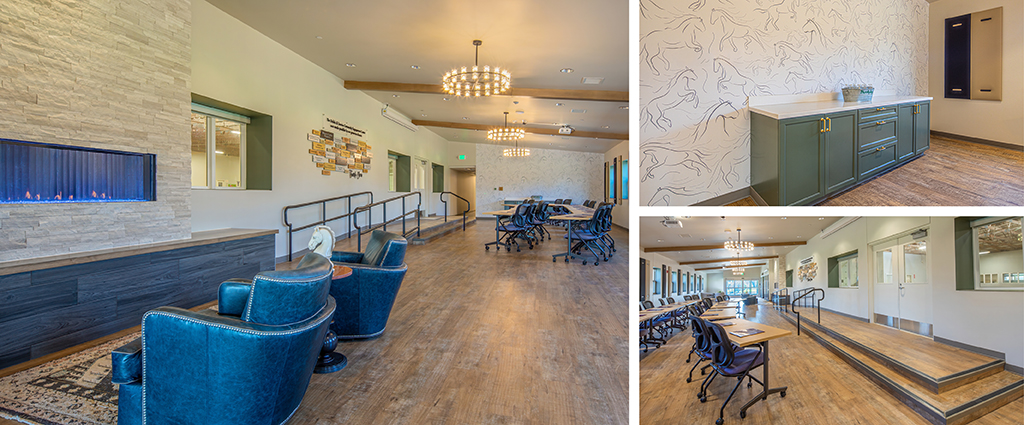
For children who know hospitals and doctors’ offices too well, the difference between a cold, institutional space and a warm, welcoming one is not a detail. It is everything.
More than a building
Projects like this one don’t come along often. Designing for children with disabilities demands more than technical precision: it demands empathy, creativity, and a willingness to ask what the space should feel like before asking what it should look like. Throughout this project, our team worked diligently to honor the trust placed in us, treating every donated dollar with care and every design decision as an opportunity to serve these children better.
The horses were always the heart of this place. Now the building is worthy of them.
Want to see how purpose-driven design can transform your community space? Explore our Community Studio work
Share this post on